I have a confession to make.
For years, I thought scrambled eggs were boring. Just… eggs in a pan. Nothing special, nothing exciting. I’d make them in two minutes flat, slap them on toast, and call it breakfast.
Then one Sunday morning, I had nowhere to be and nothing to rush toward. I made myself a slow cup of coffee, stood at the stove, and actually paid attention to my eggs.
Friends, that was the day everything changed.
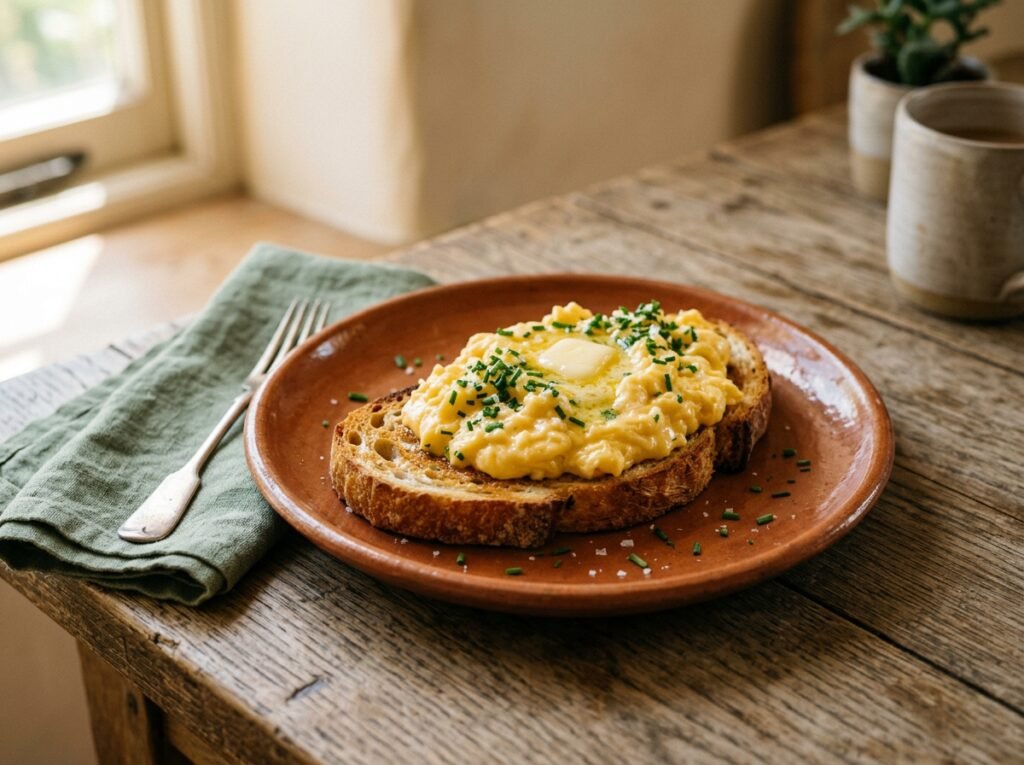
These scrambled eggs are silky, soft, and utterly luxurious. They take exactly four minutes and require zero special skills. But the tiny details — the low heat, the butter, the patience — make them taste like something from a fancy brunch spot, not your Tuesday morning kitchen.
This is the recipe I now make every single weekend. And once you try it, you will too.
Why This Recipe Works
Most scrambled egg recipes tell you to cook on high heat. That’s the biggest mistake you can make. High heat causes proteins to seize up quickly — which gives you rubbery, dry, bouncy eggs. Not what we want.
The secret? Low and slow.
- Low heat keeps the eggs creamy and glossy, not dry and crumbly
- Cold butter added in stages creates silkiness and slows the cooking
- Pulling the pan off the heat at the right moment means the eggs finish cooking in their own warmth — perfectly soft every time
- Salt at the end (not the beginning) prevents the eggs from weeping liquid
What You’ll Need
The beauty of this recipe is the simplicity. You need very little, but quality matters here — this is not the place for sad old eggs and margarine.
- Eggs — 3 large, the freshest you can find. I always reach for free-range eggs; the yolks are deeper yellow and the flavour is noticeably better.
- Butter — 1 tablespoon of real, unsalted butter. None of that margarine business, please.
- Salt and black pepper — added at the very end, just before serving.
- Optional: crème fraîche — one small dollop stirred in at the end makes the eggs extra rich and creamy. This is my Sunday treat.
How to Make Perfect Scrambled Eggs
Before we start — a quick note on timing. Scrambled eggs wait for no one. Have your toast ready, your plate warm, your coffee poured. Once you start, these come together fast.
Step 1 — Whisk the eggs
Crack your eggs into a bowl and whisk well — really well. You want the yolks and whites fully combined, no streaks.
Step 2 — Low heat, cold butter
Place a non-stick pan over the lowest heat your stove allows. Add the butter. Let it melt slowly — it shouldn’t sizzle aggressively. If it’s browning, your heat is too high.
Step 3 — Pour in the eggs and be patient
Pour in the whisked eggs. Now here’s the part that requires discipline: do not touch them immediately. Let them sit for about 30 seconds until you see the edges just starting to set.
Then, using a rubber spatula, gently push the eggs from the edges toward the centre. Make big, slow, sweeping motions. You’re creating large, soft curds — not scrambling them into tiny pieces.
Step 4 — Pull off the heat before they’re done
This is the most important step. When the eggs look about 80% cooked — still slightly glossy and just a little underdone — take the pan completely off the heat. The residual warmth will finish them perfectly.
Step 5 — Season and serve immediately
Add a generous pinch of salt and a crack of black pepper. Slide onto your toast and eat right away.
Emma’s Tips for the Best Scrambled Eggs
These are the little things I’ve learned from making this recipe dozens of times.
- Room temperature eggs cook more evenly. Take them out of the fridge 15 minutes before cooking if you have time.
- Non-stick pan is non-negotiable. This is not the recipe for your cast iron.
- Don’t walk away. Keep your eyes on the pan at all times.
- Want them extra fluffy? Whisk in 1 teaspoon of cold water per egg before cooking.
- Never add salt before cooking — it breaks down the protein structure and makes the eggs watery.
What to Serve with Scrambled Eggs
- Thick sourdough toast — my first choice, always
- Smashed avocado with a squeeze of lemon
- Crispy bacon or smoked salmon
- A handful of fresh chives or dill on top
- Grilled cherry tomatoes on the side
Frequently Asked Questions
Can I make scrambled eggs ahead of time?
Honestly? No. Scrambled eggs must be eaten fresh. They turn rubbery within minutes. This recipe is so fast (4 minutes!) that there’s really no reason to make them ahead.
How many eggs per person?
I use 3 eggs per person as a main breakfast. If serving alongside other dishes, 2 eggs is plenty.
Why are my scrambled eggs watery?
Two likely culprits: you added salt before cooking, or you cooked them on high heat. Follow the low-and-slow method and season only at the end.
Can I add cheese?
Absolutely! Stir in a tablespoon of grated parmesan just before you take the pan off the heat. The cheese will melt from the residual warmth.
I hope these scrambled eggs become your new weekend ritual. There’s something so grounding about making a simple, beautiful breakfast — just for yourself, just because you deserve it.
Let me know in the comments how yours turned out! 🍳
— Emma x